Ghent University - Marine Biology Research group
Marine Biology Section: Introduction
The Marine Biology research group is a scientific unit of the Ghent University. Our mission is to understand the sea. We are convinced  that our marine research both leads to fundamental scientific insights in the ecology and evolution of marine ecosystems and contributes to the sustainable management and exploitation of ‘the last wilderness’.
Since the seventies, the Marine Biology research group is working in the marine environment and has specialized mainly in the ecology of the sea bottom. Bottom dwelling organisms are called benthos and are perceived invisible. However, this benthos is not only important because of their biodiversity and numbers in which they occur, but also because they are crucial in the ecosystem as food for other species (as fish, crabs…).
Our research topics range from the North Sea bottom over laboratory experiments to deep-sea, tropical and polar environments. The huge range of topics is covered by a dynamic team of 4 professors, 8 post-docs, 20 Ph D students and 9 technicians.


Latest News
 
 
Spatial planning at sea: A new EU-funded project
Wednesday, 03 February 2010 16:10

For the next four years, Ghent University is involved in a new EU project, together with 17 other partners. It is all about Monitoring and  Evaluation of Spatially Managed Areas (MESMA). UGent will mainly coordinate the different case studies. The MESMA project focuses on marine spatial planning and aims to produce integrated management tools (concepts, models and guidelines) for monitoring, evaluation and implementation of Spatially Managed Areas (SMAs). The project results will support integrated management plans for designated or proposed sites with assessment methods based onEuropean collaboration.
The main tasks in the project are information analysis, the development of a generic framework, the testing and evaluation of this framework through case-studies and the development of a toolbox.
MESMA will supply innovative methods and integrated strategies for governments, local authorities, stakeholders, and other managerial bodies for planning and decision making at different local, national, and European scales, for sustainable development of European seas and coastal areas. This will comprise an easy accessible data system, containing information on the distribution of marine habitats and species, economic values, and human uses, in order to support dialogue between politicians, stakeholders and the public in general
MESMA will provide a firm basis for the implementation of the Marine Strategy Directive and related policies.


Last Updated on Wednesday, 03 February 2010 16:48
 
Antarctic expedition at the Dallmann laboratory, Jubany station
Wednesday, 03 February 2010 14:27

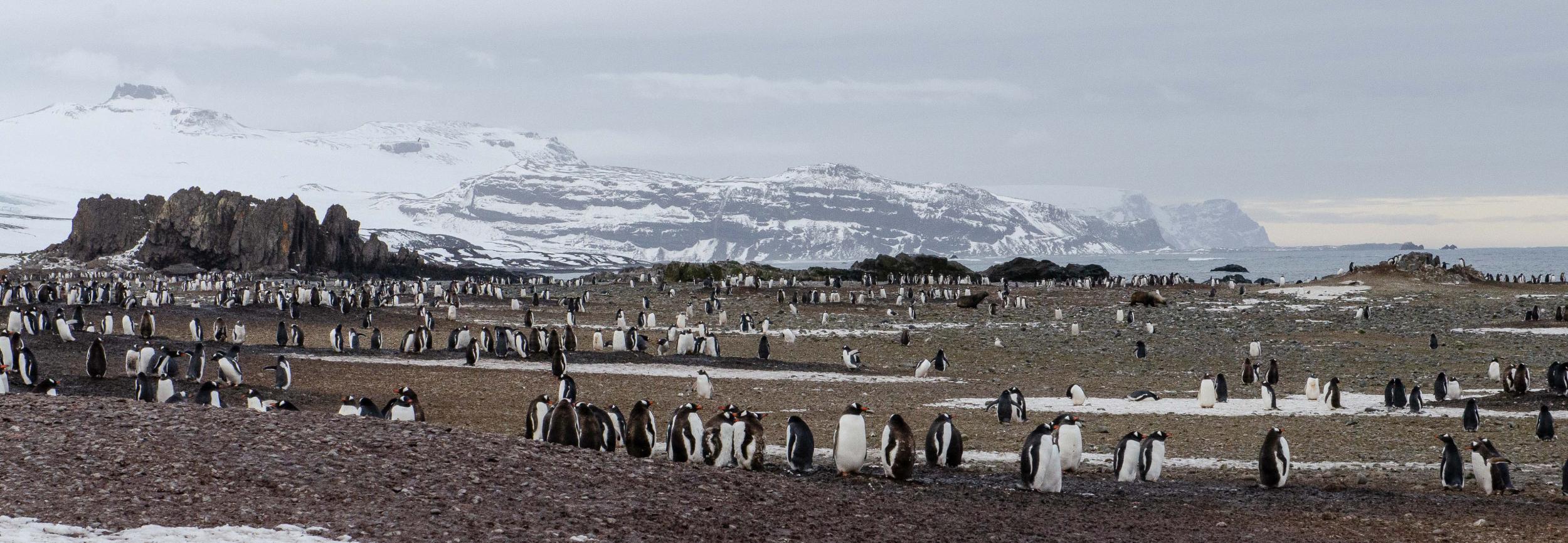
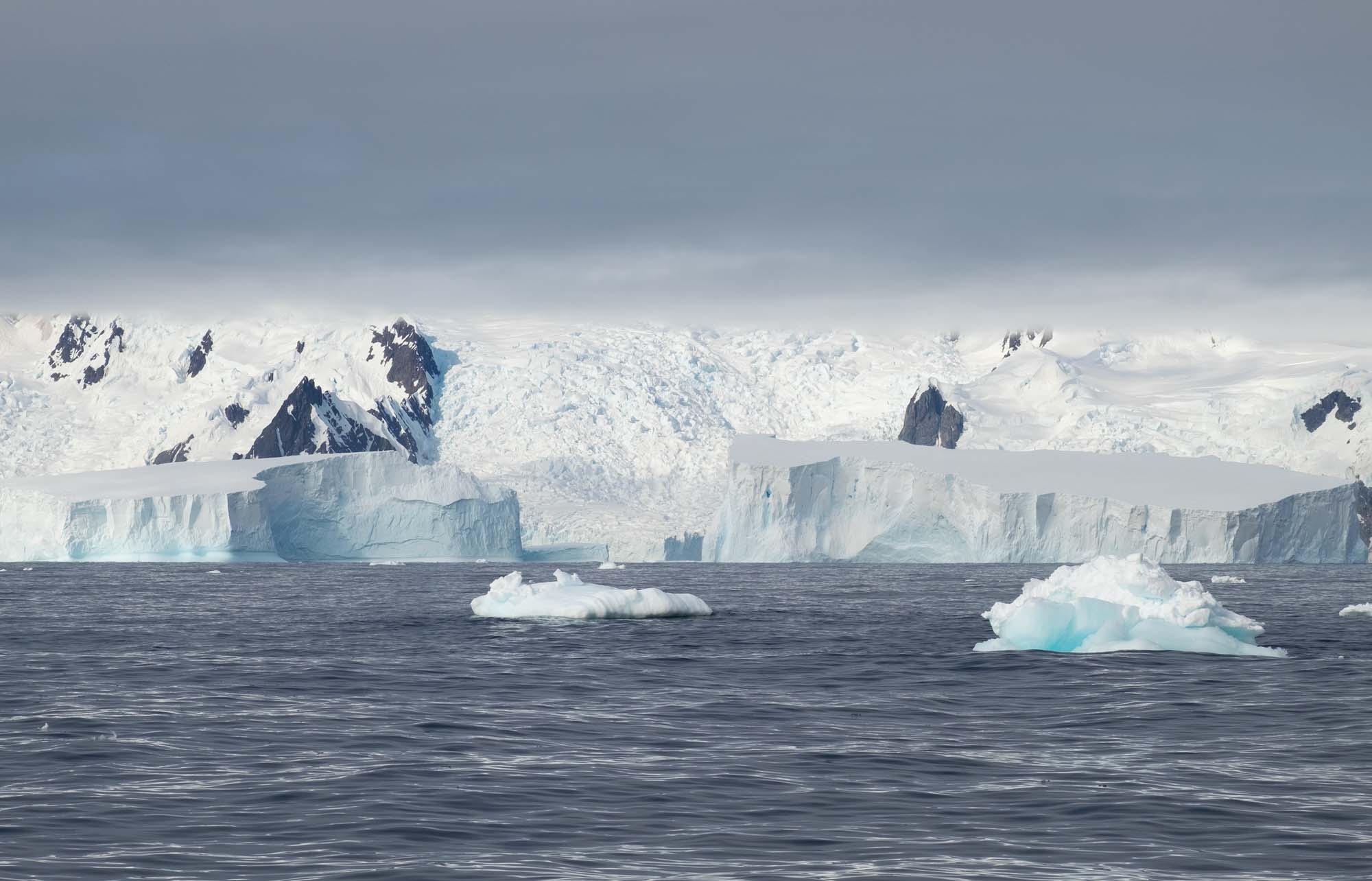
On the 28th of  January Francesca Pasotti (PhD student) and her supervisor Prof. Ann Vanreusel left from Buenos Aires towards King George Island for an Antarctic research expedition on the impact of climate change on the marine environment. King George Island (also known as Isla 25 de Mayo) is a sub-antarctic island belonging to the western side of the Antarctic Peninsula. Here, in Potter Cove, one of the several embayments of the island, the Dallmann laboratory (Alfred Wegener Institute, Germany), the facilities provided by the Argentinean research station and thelogistic of the military base “Jubany”, lend to scientists the chance to investigate intensively and relatively easily the surrounding polar environment and the effects that global warming can have on its delicate equilibria. The cove waters are fed by the Fourcade glacier, which is part of the Warsawa icefield and is actively retreating since the early 1950’s. Our research group is involved in an international project named IMCOAST (Impact of climate induced glacial melting on marine coastal systems in the Western Antarctic Peninsula region) which involves the collaboration of Germany, Belgium, The Netherlands, Spain, Poland and Argentina covering research topics such as earth sciences, geology, sedimentology, microbiology, phytoplankton dynamics, macrobenthos ecology and finally us, the meiobenthos functional ecology.

Last Updated on Wednesday, 03 February 2010 15:18
Read more...
 
EMBC students launch campaign for the Climate Change Summit in Copenhagen
Thursday, 03 December 2009 11:25

Throughout Europe, students of the Erasmus mundus Marine Biodiversity and Conservation programme have rallied together in an attempt to have their concerns communicated at the upcoming Climate Change Summit in Copenhagen (COP15).
Over 50 students from 6 continents and more than 20 countries have independently launched a campaign to voice their concerns about the one thing that they all share in common: An overwhelming uneasiness concerning the fate of the world’s oceans.
Several weeks ago students began posting pictures of themselves on the internet holding billboards detailing their individual concerns in their native language accompanied by an English translation. They hope to send their messages to the world leaders at the COP15 summit and increase public awareness about the fragility of today’s oceans and the consequences of ecosystem collapse. The students are studying at 6 European universities and haven’t had the opportunity to meet or speak as a group yet.


Last Updated on Thursday, 03 December 2009 13:49
 
Marelac Master students on a Belgica cruise
Tuesday, 24 November 2009 16:54

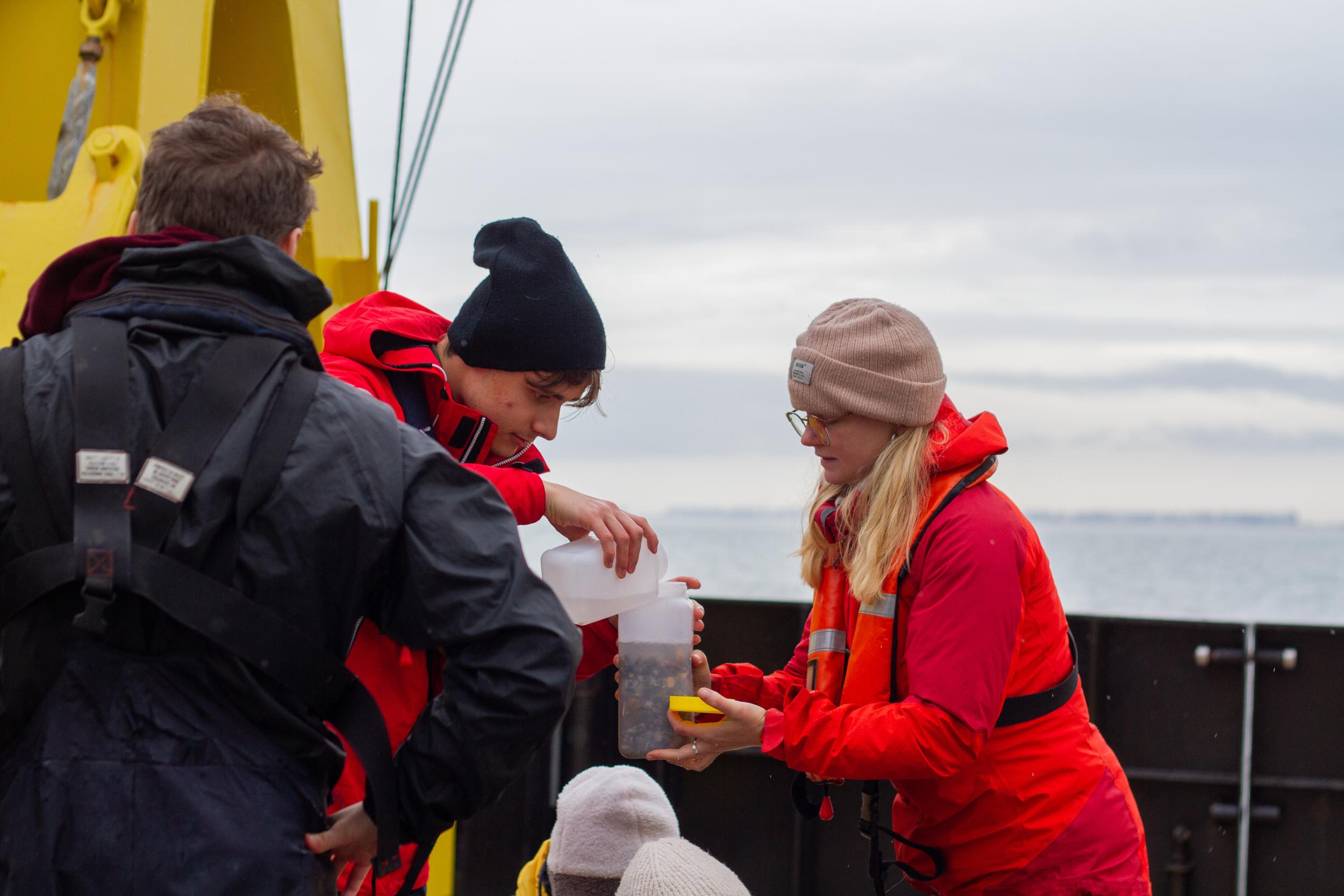
From 16 to 19 November, the students of the Marelac Master course of the Ghent University went on a cruise with the research vessel “Belgica”. The aim of this week on the “Belgica” was to participate in a research campaign with a focus on Ensis.
Multibeam images were taken in the area “De Vlakte van de Raan” where Ensis is present. Based on these images, spots with high densities of Ensis were selected for sampling with the Van Veen grab. These samples were examined with a focus on Ensis. In addition, demonstrations of water sampling with a Niskin bottle, measuring CTD profiles etc. were performed.

Despite the rough sea, the Marelac students were doing very well!


Last Updated on Tuesday, 24 November 2009 17:07
 
<< Start < Prev 1 2 3 4 5 6 7 Next > End >>

Page 1 of 7
 
Copyright © 2009
Marine Biology Research Group, Ghent University
Website hosted by Flanders Marine Institute (VLIZ)